Live cloud records replace static packaging.
Static QR codes and holograms can be photocopied. An active verification system checks live serialization records, batch validity, scan timestamps, and custom security thresholds.
 TrustQR TrustQR
 Product verification technology connects every physical product to a secure digital record. TrustQR is a QR product verification system built for manufacturers and packaging operations. Connect batches to serialized cloud records, detect duplicate scans, and integrate with your existing assembly and labeling lines.
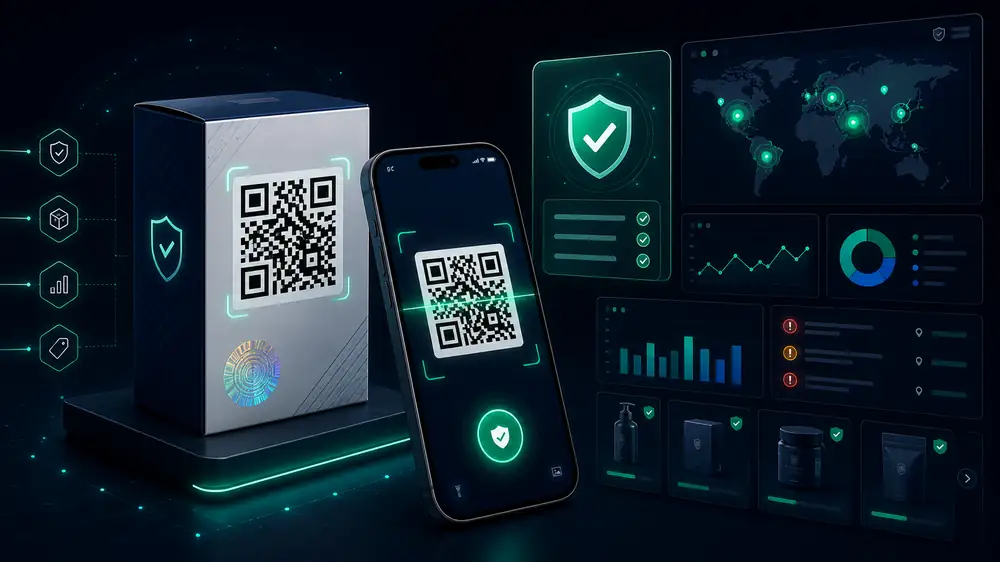
Product verification technology is the infrastructure that links each physical product to a secure digital record and checks every scan against it. A QR code product verification system gives manufacturers a serialized cloud engine to assign unique QR codes to each packaged unit. While consumers perform instant product verification using smartphone cameras, the system validates scan integrity, flags cloned labels, and maps distribution movement across global supply chains.
TrustQR provides manufacturing teams with serialized QR codes, real-time validation engines, duplicate-scan tripwires, and enterprise dashboard reporting. This page details system architecture and factory rollout blueprints, while our consumer walkthrough explains end-user product verification.
Creates a unique digital identity for every packaged unit
Connects each QR code to a secure cloud product record
Validates code status, expiry rules, and scan history
Flags duplicate scans and copied label anomalies in real time
Provides rollout blueprints for packaging lines and factories
Supports frictionless smartphone verification without app installs
Feeds scan intelligence and diversion alerts into brand dashboards
Product verification technology is the technical infrastructure that connects each physical product to a secure digital record and validates scan events against that record. A product verification system is its practical implementation: the secure cloud database, validation rules engine, and packaging serialization layer that verifies physical unit identity at the moment of scan.
Static QR codes and holograms can be photocopied. An active verification system checks live serialization records, batch validity, scan timestamps, and custom security thresholds.
The engine evaluates scan velocity, suspicious IP anomalies, and cross-border geographic discrepancies to flag compromised packaging before fake products proliferate.
TrustQR connects product records, serialized QR codes, scan events, validation logic, and dashboard reporting.
The brand creates product, batch, label, or campaign records inside TrustQR before codes are generated.
Each QR code is connected to a unique product identity, not only a static marketing URL.
When a customer scans, TrustQR records the scan event and checks the product identity in real time.
The system validates product status, expiry settings, scan history, duplicate activity, and suspicious signals.
Brands receive verification history, geographic patterns, repeat scans, and risk signals for review.
Without a system of record, brands cannot reliably connect product scans to product identity, scan history, or copied-code signals.
OECD and EUIPO research has estimated counterfeit and pirated goods at a significant share of global trade.
Counterfeit products can reduce customer confidence and damage long-term brand reputation.
Fake medicines, electronics, supplements, and consumer goods can create health, safety, and quality risks.
TrustQR combines verification, authentication, and scan intelligence in a single platform.
A supplement brand produces 100,000 units monthly. Each product receives a unique TrustQR code. Several scans suddenly appear in multiple countries from the same QR code.
Repeated scans from unexpected markets can indicate copied packaging, diversion, resale, or counterfeit movement.
The brand can investigate earlier, before suspicious products spread further through the market.
Static labels can help with packaging presentation, but brand protection needs scan intelligence.
| Feature | Basic QR Code | Hologram Label | Manual Serial Check | TrustQR |
|---|---|---|---|---|
| Unique Product Identity | Yes | No | Yes | Yes |
| Duplicate Scan Detection | No | No | No | Yes |
| Suspicious Scan Alerts | No | No | No | Yes |
| Scan Analytics | No | No | No | Yes |
| Customer Verification | Limited | Limited | Limited | Yes |
| Cloud Dashboard | No | No | No | Yes |
How manufacturers deploy TrustQR from initial packaging integration to high-volume assembly lines and global distribution.
Define which product lines, packaging formats, factory lines, and market regions will receive serialized QR verification first.
Incorporate dynamic 2D barcodes onto labels, cartons, tamper-evident seals, or digital printing lines with unique unit serial numbers.
Buyers scan with native phone cameras—no app download required. Instant verification pages display genuine confirmation.
Brand security teams review real-time alerts when codes are scanned repeatedly, across conflicting geographic locations, or out of sequence.
Expand across product lines and international markets, syncing scan intelligence with distribution channels and supply chain databases.
A structured rollout minimizes packaging downtime, optimizes consumer scan engagement, and provides real-time visibility across channel distribution.
Start with high-risk SKUs or pilot distribution markets before enterprise-wide manufacturing deployment.
Native mobile browser verification maximizes customer engagement and verification rates on retail shelves.
Customer support teams immediately see complete scan timelines and geolocation signals for reported items.
Detect unauthorized diversion when products packaged for one territory surface in unexpected markets.
Product verification can support many physical product categories where authenticity matters.
Verify authenticity before consumption.
Protect against counterfeit beauty products.
Increase transparency and consumer confidence.
Support verification workflows and patient safety.
Help identify potentially counterfeit products.
TrustQR is designed to help brands identify suspicious product activity after a code is scanned.
TrustQR is operated by TrustQR Ltd, a UK-registered SaaS company focused on product verification, product authentication, anti-counterfeit protection, scan intelligence, and brand protection.
17272910
Direct answers for brands comparing product verification and anti-counterfeit software.
Product verification technology is the technical infrastructure that connects each physical product to a secure digital record and validates every scan event against that record, so a buyer or inspector can confirm the unit is genuine in seconds.
A product verification system is the practical implementation of product verification technology: serialized QR codes on packaging, a cloud database of product records, a scan-validation engine, and reporting for brand teams.
A product verification tool is the consumer-facing part of the system — usually a smartphone scan of a QR code that opens a verification page showing whether the product is genuine, already scanned, or suspicious.
A QR code product verification system provides the cloud infrastructure to assign unique, serialized QR codes to packaged units, validate consumer scans in real time, and alert manufacturers to counterfeit cloning.
While our consumer workflow explains how buyers scan packaging on smartphones, this system architecture focuses on manufacturing integration, batch serialization, validation engines, and alert analytics.
Yes. TrustQR verification pages can be accessed directly through standard smartphone cameras without installing an app.
TrustQR generates serialized codes that can be printed via digital print lines, label applicators, or packaging converters onto boxes, tamper-evident seals, or bottle labels.
TrustQR flags duplicate scans across different IP addresses, conflicting geographic locations, or impossible timeframes, alerting the brand dashboard immediately.
Yes. TrustQR supports multi-facility rollouts, batch tracking, and separate security thresholds per product category.
Yes. Providing instant proof of authenticity gives consumers peace of mind and reinforces brand integrity at the point of sale.
Explore our end-to-end platform capabilities across customer workflows, authentication technology, and brand defense.
See how customers scan packaging and receive instant verification results without downloading an app.
Deploy mobile authentication and digital certificates to confirm product legitimacy on retail shelves.
Stop cloned packaging with active duplicate scan tripwires and real-time cloud anomaly alerts.
Help customers verify authenticity, monitor suspicious activity, and strengthen trust with TrustQR.
These references support the market and consumer-safety context behind product verification systems, QR authentication, and anti-counterfeit product protection.