System records replace static claims.
A printed label can make a claim. A verification system checks a live record, product status, scan history, and rules controlled by the brand.
 TrustQR TrustQR
 TrustQR product verification technology gives every product a unique digital identity and verifies QR scan events against product records, expiry rules, scan history, and duplicate-code signals.
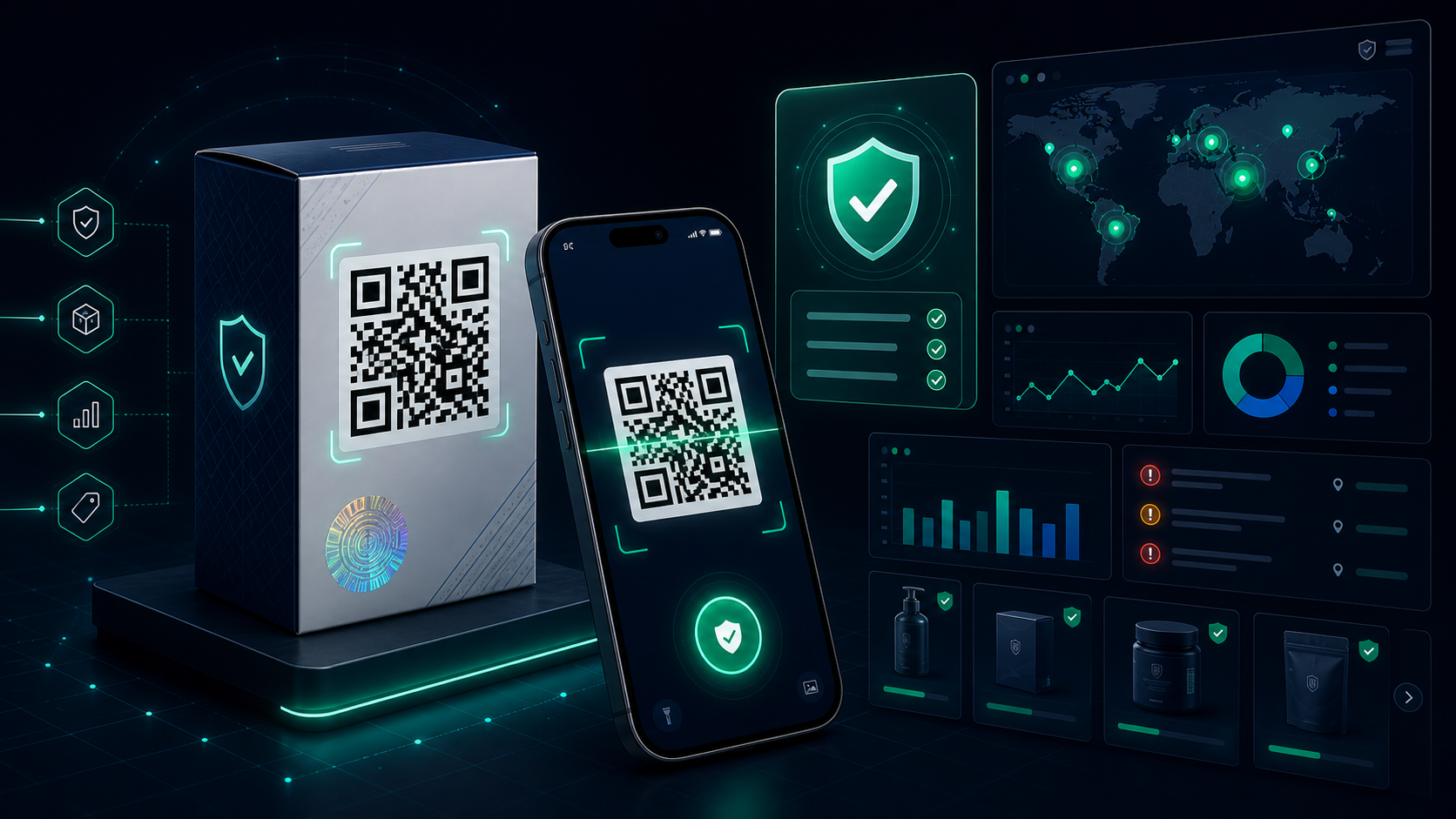
Product verification technology is the technical layer behind product authenticity checks. It stores product identities, validates QR scan events, checks expiry and status rules, detects duplicate scans, and gives brand teams a dashboard for verification intelligence.
TrustQR is built around product records, serialized QR codes, scan validation, duplicate-code detection, and dashboard reporting. This page explains the system architecture, while the product verification solution page explains rollout strategy.
Creates a unique digital identity for every product
Connects each QR code to a secure product record
Validates code status, expiry rules, and scan history
Flags duplicate and suspicious scan events
Records verification activity for brand teams
Supports customer-facing authenticity pages
Feeds scan intelligence into the TrustQR dashboard
Product verification technology is the database, validation logic, QR code layer, and reporting workflow that helps brands verify product identity at the moment of scan.
A printed label can make a claim. A verification system checks a live record, product status, scan history, and rules controlled by the brand.
The system does more than return a yes-or-no page. It records repeated scans, unusual regions, expired product status, and copied-code signals.
TrustQR connects product records, serialized QR codes, scan events, validation logic, and dashboard reporting.
The brand creates product, batch, label, or campaign records inside TrustQR before codes are generated.
Each QR code is connected to a unique product identity, not only a static marketing URL.
When a customer scans, TrustQR records the scan event and checks the product identity in real time.
The system validates product status, expiry settings, scan history, duplicate activity, and suspicious signals.
Brands receive verification history, geographic patterns, repeat scans, and risk signals for review.
Without a system of record, brands cannot reliably connect product scans to product identity, scan history, or copied-code signals.
OECD and EUIPO research has estimated counterfeit and pirated goods at a significant share of global trade.
Counterfeit products can reduce customer confidence and damage long-term brand reputation.
Fake medicines, electronics, supplements, and consumer goods can create health, safety, and quality risks.
TrustQR combines verification, authentication, and scan intelligence in a single platform.
A supplement brand produces 100,000 units monthly. Each product receives a unique TrustQR code. Several scans suddenly appear in multiple countries from the same QR code.
Repeated scans from unexpected markets can indicate copied packaging, diversion, resale, or counterfeit movement.
The brand can investigate earlier, before suspicious products spread further through the market.
Static labels can help with packaging presentation, but brand protection needs scan intelligence.
| Feature | Basic QR Code | Hologram Label | Manual Serial Check | TrustQR |
|---|---|---|---|---|
| Unique Product Identity | Yes | No | Yes | Yes |
| Duplicate Scan Detection | No | No | No | Yes |
| Suspicious Scan Alerts | No | No | No | Yes |
| Scan Analytics | No | No | No | Yes |
| Customer Verification | Limited | Limited | Limited | Yes |
| Cloud Dashboard | No | No | No | Yes |
Product verification can support many physical product categories where authenticity matters.
Verify authenticity before consumption.
Protect against counterfeit beauty products.
Increase transparency and consumer confidence.
Support verification workflows and patient safety.
Help identify potentially counterfeit products.
TrustQR is designed to help brands identify suspicious product activity after a code is scanned.
TrustQR is operated by TrustQR Ltd, a UK-registered SaaS company focused on product verification, product authentication, anti-counterfeit protection, scan intelligence, and brand protection.
17272910
Direct answers for brands comparing product verification and anti-counterfeit software.
Product verification technology is the technical infrastructure that connects each physical product to a secure digital record and validates scan events against that record.
A product verification system is a practical implementation of product verification technology for QR code checks, product records, scan validation, and reporting.
A QR code links a product to a secure verification database that checks product identity, product status, expiry rules, duplicate scans, and suspicious scan behavior.
Verification confirms product status. Authentication validates legitimacy using secure identifiers and supporting checks.
QR codes can be copied, which is why duplicate scan detection and scan intelligence are important.
It can help identify abnormal activity that may indicate counterfeit products.
Yes. TrustQR verification pages can be accessed through a standard smartphone browser.
Supplements, cosmetics, food, pharmaceuticals, electronics, and consumer products can use product verification.
It can help customers feel more confident about product authenticity before purchase or use.
Continue from the product verification system into authentication, counterfeit detection, and brand protection topics.
Help customers verify authenticity, monitor suspicious activity, and strengthen trust with TrustQR.
These references support the market and consumer-safety context behind product verification systems, QR authentication, and anti-counterfeit product protection.