It starts with rollout choices.
Brands decide which products need verification, where codes should appear, which markets are highest priority, and what customers should see after a scan.
 TrustQR TrustQR
 TrustQR helps brands plan and launch QR product verification across packaging, customer scan pages, support workflows, market monitoring, and multi-product rollouts.
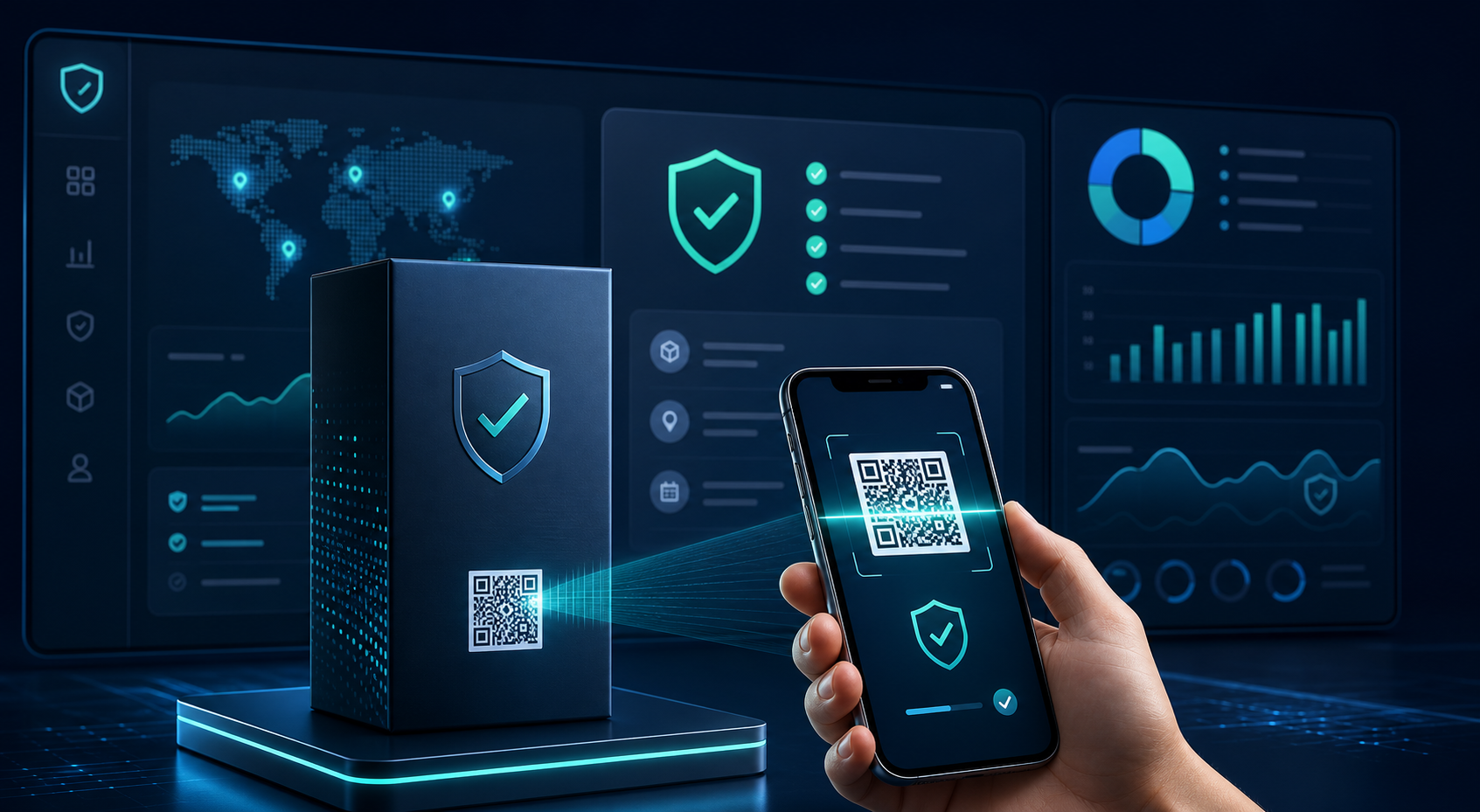
A product verification solution is the complete brand rollout around product verification: where codes appear, how customers scan, what result pages explain, how teams review alerts, and how reporting supports customer trust and market visibility.
This page focuses on implementation: packaging decisions, customer experience, team workflows, support visibility, and scaling product verification across real markets.
Plan product verification rollout by product line
Add verification to packaging and labels
Give customers a simple scan experience
Route suspicious scan alerts to brand teams
Use reports for support and market review
Scale from pilot batches to multi-market programs
Connect verification to customer trust goals
A product verification solution combines the software, operational workflow, customer experience, packaging placement, and reporting process needed to make verification useful in market.
Brands decide which products need verification, where codes should appear, which markets are highest priority, and what customers should see after a scan.
The solution connects packaging teams, support teams, product teams, and brand protection teams around one verification workflow.
TrustQR helps brands move from planning to packaging, customer scanning, alert review, and scale.
The brand decides which product lines, batches, markets, and packaging formats should receive verification first.
TrustQR codes are prepared for labels, boxes, inserts, seals, or campaign materials with the right product and batch context.
Customers scan with a standard smartphone browser and see a clear authenticity page without installing an app.
Brand teams review duplicate scans, unusual regions, support requests, and suspicious patterns from the dashboard.
The program can expand to more products, markets, languages, campaigns, and higher-risk protection layers over time.
A useful program is not only a code on a box. It needs customer messaging, team ownership, scan review, support context, and a path to scale.
Verification data helps brands understand customer scan behavior, market engagement, suspicious activity, and possible product movement patterns.
Consumers can verify authenticity, confirm relevant product information, and check expiry details before purchase or use.
Duplicate scans, unusual scan locations, and repeated activity can provide signals that help brands investigate potential counterfeit behavior sooner.
Product verification works best when it supports packaging, customer support, market review, and brand protection decisions.
Brands can start with priority SKUs, high-risk markets, or premium batches instead of trying to protect every product at once.
A clear scan page helps customers understand product status without downloading an app or contacting support first.
Scan history and product status give support teams more context when a customer reports a suspicious item.
Regional scan data helps teams understand where verification is used and where suspicious activity may need attention.
TrustQR combines rollout planning, QR verification, customer scan pages, and brand-side reporting in one cloud platform.
A cosmetics company launches a premium skincare product in two markets. The brand starts with one product line, adds TrustQR codes to packaging, and prepares a customer-facing scan page.
Packaging, support, and brand teams can review the first scan data before expanding the solution to more SKUs or regions.
As more products are added, TrustQR keeps verification pages, scan history, alerts, and dashboard reporting in one workflow.
A one-off QR campaign can publish information. A verification solution gives teams a repeatable operating model.
| Feature | Spreadsheet Process | Basic QR Campaign | Traditional Label | TrustQR |
|---|---|---|---|---|
| Rollout Planning | Manual | No | Limited | Yes |
| Packaging Workflow | Manual | Limited | No | Yes |
| Customer Scan Experience | No | Static page | Limited | Yes |
| Support Context | No | No | Limited | Yes |
| Market Reporting | No | Basic | No | Yes |
| Multi-Product Scaling | Manual | Limited | No | Yes |
Brands can start with one high-risk product line and expand verification as the program proves value.
Verify authenticity before consumption.
Protect premium products from imitation.
Improve product transparency and trust.
Support verification initiatives and product status checks.
Identify potentially counterfeit products and risky components.
Give customers a simple authenticity check.
TrustQR is designed for the operational moments where brands need a practical verification workflow.
TrustQR is operated by TrustQR Ltd, a UK-registered SaaS company focused on product verification, product authentication, anti-counterfeit protection, scan intelligence, and brand protection.
17272910
Direct answers for brands comparing QR verification, authentication software, and anti-counterfeit monitoring.
A product verification solution is the end-to-end rollout approach for adding verification to products, packaging, customer scan pages, support workflows, and brand dashboards.
A basic QR code may open a page. A verification solution includes rollout planning, packaging workflows, validation logic, scan history, alerts, analytics, and customer-facing verification results.
Yes. TrustQR verification can run in a standard smartphone browser.
Supplements, cosmetics, food, pharmaceuticals, electronics, and consumer goods can benefit from product verification.
It can help detect suspicious activity, copied-code behavior, and abnormal scan patterns that may indicate counterfeit distribution.
Yes. Brands can connect expiry and product status information to the verification result.
Scan intelligence means insights derived from verification activity, including scan timing, repeat scans, location signals, and suspicious behavior.
Yes. TrustQR is designed to support multiple products, batches, brands, and verification workflows.
Use these pages to compare the rollout solution with system architecture, counterfeit monitoring, and brand strategy.
Protect products, improve transparency, and strengthen customer trust with TrustQR.
These references support the market, safety, and standards context behind product verification solutions, QR code verification, and anti-counterfeit monitoring.